Benefits of Puzzles for Adults: What the Science Says
By Nicholas Mathis, Toymaker & Founder of The Wundorium Co.
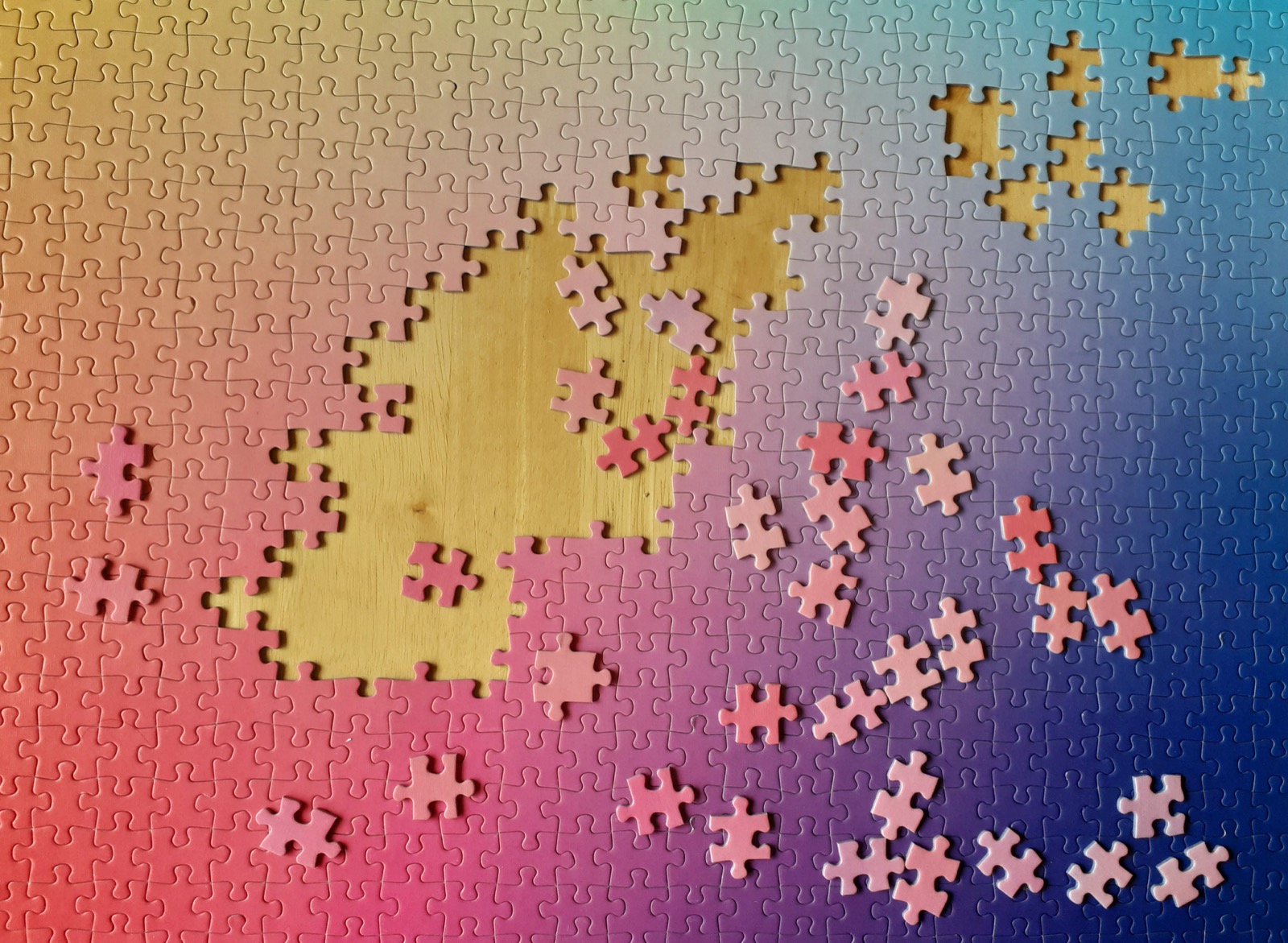
There's a moment, about ten minutes into a jigsaw puzzle, when everything else falls away. The phone stops mattering. The to-do list stops nagging. It's just you, the pieces, and a quiet focus that feels almost meditative — the kind of calm that's hard to find anywhere else in a normal day.
If you've felt this, you've probably wondered the same thing I have: is something real happening in your brain, or does it just feel that way?
I went looking for the answer in the peer-reviewed research, and what I found was more interesting than I expected. The science is there — puzzles genuinely engage your brain in ways that few other leisure activities can match, and the long-term evidence for staying mentally active is strong. But the deeper story isn't really about cognition. It's about why we reach for puzzles in the first place.
Think about when puzzle sales surge. During the Great Depression, Americans were buying ten million jigsaw puzzles a week. During the 2020 lockdowns, Ravensburger's U.S. sales jumped 370% in a single week. People who hadn't touched a jigsaw since childhood were suddenly spending their evenings hunched over a table full of pieces. These weren't bored people looking for entertainment. These were overwhelmed people looking for something they could fix.
A jigsaw puzzle is a broken image. You take disorder — hundreds of scattered, meaningless fragments — and you make it whole again. You impose order on chaos, piece by piece, until something beautiful emerges exactly as it ought to be. In a world that often feels beyond your control, puzzling offers something quietly radical: agency, purpose, and the certainty that if you stay with it, the broken thing will become whole.
That's the thread that runs through all of it — the cultural pattern, the neuroscience, the stress research, the flow states. Here's what the science actually says, and what it doesn't.
What happens in your brain when you solve a puzzle
Jigsaw puzzles look simple. You're just matching shapes and colors, right? But from a cognitive perspective, puzzling is surprisingly demanding — and in a way that very few other leisure activities can match.
In 2018, researchers at Ulm University in Germany published the first rigorous study specifically examining the cognitive demands of jigsaw puzzling. Patrick Fissler and his colleagues recruited 100 adults aged 50 and older and assessed their puzzle-solving skill alongside a comprehensive battery of cognitive tests. The results, published in Frontiers in Aging Neuroscience, were striking.
Jigsaw puzzle skill correlated with global visuospatial cognition at r = 0.80 — a remarkably strong association in psychological research. But more telling was the breadth of the relationship. Puzzle skill didn't just track with one or two abilities. It correlated significantly with every cognitive domain the researchers measured: visual perception, mental rotation, processing speed, cognitive flexibility, working memory, reasoning, and episodic memory. The correlations ranged from 0.45 to 0.72 across these domains.
What this means is that solving a jigsaw puzzle isn't a single cognitive act. It's a concert. When you pick up a piece and try to place it, your brain is simultaneously recognizing colors and patterns, rotating the piece mentally to test orientation, holding the surrounding pieces in working memory, comparing what you see against what you remember of the reference image, and executing fine motor control to test the fit. Few leisure activities demand this kind of integrated, multi-domain engagement.
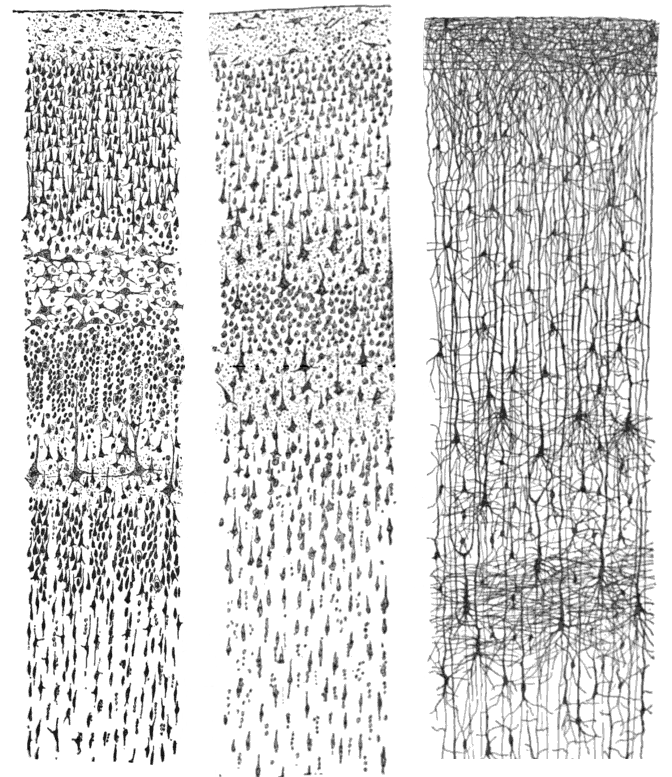
This is part of why puzzles feel different from, say, a crossword or a Sudoku. Word puzzles exercise language retrieval and verbal memory. Number puzzles exercise logical reasoning. Jigsaw puzzles exercise the visual-spatial system broadly — the same system you use to navigate a room, judge distances, read a map, or park a car. If you've ever spent an hour working through a detailed fine art or landscape puzzle and felt like your eyes were somehow sharper afterward, the Fissler study suggests that feeling reflects something real about the breadth of neural engagement involved.
One important caveat: these findings are correlational. The study shows that puzzles recruit these cognitive abilities — not necessarily that puzzles build them. It's possible that people who already have strong visuospatial skills simply enjoy and excel at puzzles. The researchers acknowledged this, which is why they also ran a controlled intervention trial. More on that shortly.
The long game: puzzles and cognitive aging
The question most people really want answered is whether puzzles can protect your brain as you age. Can doing jigsaw puzzles reduce your risk of dementia? Here the evidence is genuinely encouraging — but requires some precision about what it does and doesn't show.
The most compelling research comes from the Rush Alzheimer's Disease Center in Chicago, which has been following older adults for decades through its Memory and Aging Project. In a 2021 study published in Neurology, Robert Wilson and colleagues tracked 1,903 older adults who were free of dementia at enrollment. Participants reported how often they engaged in cognitively stimulating activities — reading, writing, playing games, doing puzzles — and received annual clinical evaluations for an average of nearly seven years.
The findings were significant. Participants with the highest levels of cognitive activity were diagnosed with dementia at an average age of 94 — five full years later than those with the lowest activity levels, who were diagnosed at an average age of 89. The result held after adjusting for education, gender, and other potential confounding factors.
Here's the part that makes this study especially interesting: 695 participants who died during the study underwent brain autopsy. The researchers found that cognitive activity levels were unrelated to postmortem markers of Alzheimer's disease pathology. In other words, staying mentally active didn't prevent the plaques and tangles that characterize Alzheimer's — but it appeared to help the brain tolerate them. Researchers call this concept "cognitive reserve": the brain's ability to keep functioning effectively even as underlying damage accumulates. Puzzles, games, reading, and writing all appeared to contribute to building that reserve.
More recently, a 2024 study from Texas A&M University analyzed data from nearly 6,000 adults aged 50 and older who already had mild cognitive impairment — a condition often considered a precursor to dementia. Published in the Journal of Cognitive Enhancement, the study tracked participants over eight years through the Health and Retirement Study. Those who engaged in cognitively stimulating leisure activities at least three to four times per week — including puzzles, reading, and games — maintained significantly higher levels of memory, working memory, attention, and processing speed compared to those who participated less often. The high-engagement group didn't just decline more slowly; they maintained more stable cognitive function across the entire study period.
And what about the Fissler study's intervention trial? The researchers randomly assigned their 100 participants to either a 30-day jigsaw puzzle program (at least one hour per day) or a control group that received cognitive health counseling. The puzzle group got measurably better at puzzles — but they did not show significant improvement in global visuospatial cognition compared to the control group over that 30-day window.
This might sound discouraging, but the researchers drew an important conclusion: the benefits of puzzling likely accumulate over years, not weeks. Thirty days wasn't enough to move the cognitive needle in a clinically meaningful way. But within the puzzle group, those who puzzled more did show greater improvement after controlling for baseline performance — a dose-response pattern suggesting that volume and consistency matter. The researchers' own framing was that puzzling is not a quick fix but rather a cognitively demanding leisure activity whose benefits compound with sustained engagement over a lifetime.
This tracks with what I see in my own family. I don't puzzle with my sons because I expect it to be medicine. I do it because I notice the focus, the patience, the slow satisfaction of progress — and because the research suggests that habits like this, built early and sustained over decades, are exactly the kind of cognitive engagement that builds reserve. It's a long game, and it's one that starts with just sitting down and doing the thing.
Why it feels the way it does
The cognitive benefits of puzzling may take years to accumulate, but the psychological benefits are immediate — and this is where the science catches up to what puzzlers already know in their bones.
When you sit down with a jigsaw puzzle, something shifts. The mental chatter quiets. You enter a state of focused absorption that psychologist Mihály Csikszentmihályi famously called "flow" — being so deeply engaged in an activity that self-consciousness fades, your sense of time distorts, and the experience becomes intrinsically rewarding.
Csikszentmihályi identified specific conditions that produce flow: the task must have a clear goal, provide immediate feedback, and strike a balance between challenge and skill. Jigsaw puzzles meet every one of these conditions. The goal is visible on the box (or the screen). Each piece either fits or it doesn't — instant feedback. And the challenge scales naturally: you can adjust piece count, toggle rotation, choose images with more or less visual complexity.
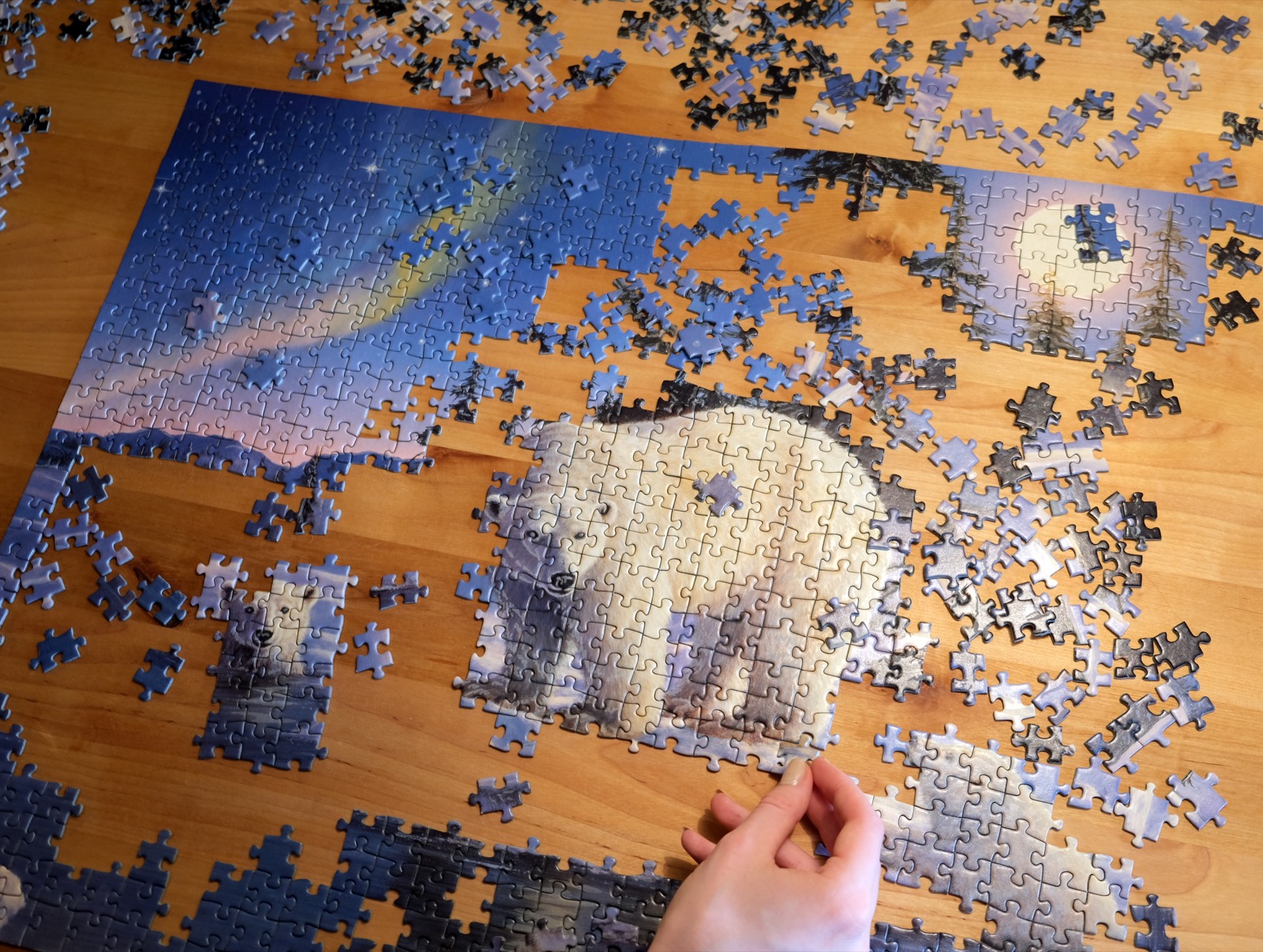
But there's something Csikszentmihályi's framework doesn't fully capture about puzzles — something that explains their particular hold on us during difficult times. A puzzle isn't just a task with a clear goal. It's a restoration. You start with a mess — a jumble of fragments that don't make sense — and through patience and attention, you bring order to it. Every piece placed is a small act of repair. The picture becomes visible, slowly, and then all at once. You made this. You fixed it.
The neurochemistry backs this up. Research suggests that flow states involve increased dopamine activity (reinforcing the behavior and sharpening pattern recognition), norepinephrine (heightening arousal and attention), and a temporary quieting of the prefrontal cortex — the part of the brain responsible for self-monitoring and worry. That last part is key. When you're deep in a puzzle, the inner critic shuts up. You aren't ruminating about what's broken in your life. You can't — the task demands too much of your attentional bandwidth. And in return, it gives you something that rumination never does: steady, visible, irreversible progress.
The Fissler research team identified this explicitly, theorizing that puzzling may function as what they called "leisure palliative coping" — a psychological timeout from stressors made possible by the activity's intense attentional demands. They also noted the role of mastery and fun: each piece placed is a small, tangible success, and those micro-rewards accumulate into something genuinely satisfying.
This, I think, is the real reason puzzle sales spike during crises. It's not about being bored. It's about being powerless. During the Depression, puzzle historian Anne Williams documented that Americans were buying ten million puzzles a week — and renting them for a nickel a night when they couldn't afford to buy. The images were deliberately comforting: cottages, lighthouses, pastoral scenes. Williams described them as "an antidote for hard times." Eighty-seven years later, during the pandemic lockdowns, the pattern repeated exactly. Ravensburger reported that the first puzzles to sell out were cozy scenes by the fireplace, followed by images of far-away places people couldn't visit. People weren't just filling time. They were choosing, piece by piece, to make something beautiful in a moment when beauty felt scarce.
A 2018 Ipsos survey found that 59% of puzzlers say they puzzle to relax, 42% cite the "brain boost," and 34% value puzzles as a way to connect socially with others. That last number matters more than it might seem. Ravensburger's president has noted that puzzles create a kind of low-pressure social space — family members who struggle with direct conversation (teenagers, especially) will sit together at a puzzle table and talk naturally because the eye contact pressure is gone. The puzzle provides a shared focus that makes connection easier. You're not facing each other. You're facing the same problem, together.
I've experienced this with my own kids. Our evening puzzle sessions aren't really about the puzzle. They're about being in the same room, working on the same thing, talking about whatever comes up. The screens are off. Nobody's checking notifications. For 30 or 45 minutes, it's just the image, the pieces, and each other. I'd call that a benefit even if the science didn't back it up — but it helps to know the science does.
If you're drawn to the calmer side of puzzling — the quiet, immersive, restorative kind — themes like coastal scenes, cozy cabins, and gardens are worth exploring. The imagery matters. Detailed, beautiful scenes hold your attention more naturally, and the visual richness is part of what sustains the flow state. You're not just solving a puzzle. You're spending an hour inside a world that looks the way you want the world to look.
What about kids?
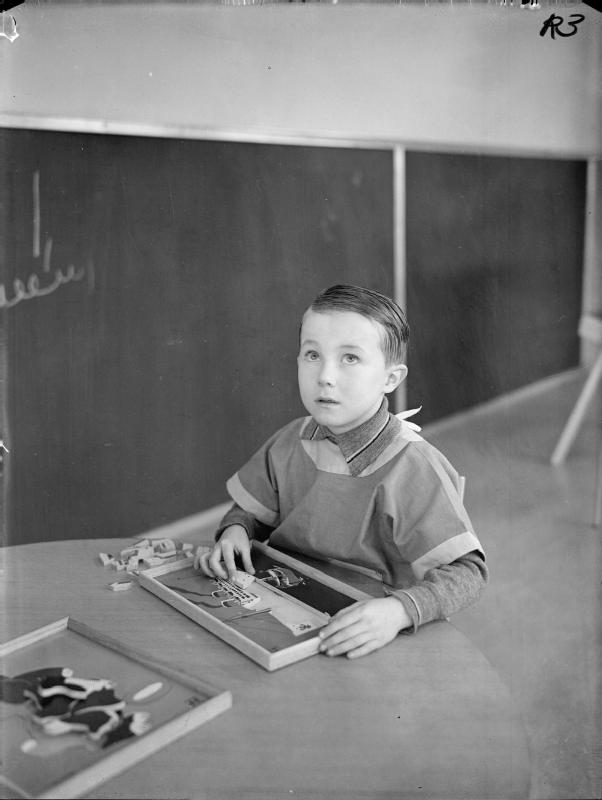
Most of the research discussed so far focuses on adults, but one of the cleanest findings in this area involves children — and it has implications for parents thinking about screen time and spatial development.
In 2012, Susan Levine and her colleagues at the University of Chicago published a study in Developmental Psychology that observed 53 children and their parents at home over two years, between the ages of 2 and 4. When the children were tested at age 4½ on a spatial transformation task — the ability to mentally rotate and match two-dimensional shapes — those who had been observed playing with puzzles performed significantly better than those who had not, even after controlling for parent education, income, and overall language input.
Among the children who did play with puzzles, the frequency of play predicted their spatial performance. More puzzling meant better spatial skills. The quality of puzzle play also mattered: a composite measure of puzzle difficulty, parent engagement, and parent use of spatial language during play was associated with better outcomes, particularly for girls.
Why does this matter beyond childhood? Spatial transformation skills — the ability to visualize objects in different orientations, to mentally rotate and manipulate shapes — are consistently linked to success in STEM disciplines. As Levine noted, activities like early puzzle play may lay the groundwork for the kind of spatial reasoning that supports mathematics, engineering, and scientific thinking. This isn't about turning toddlers into engineers. It's about giving developing brains a rich, playful context for building fundamental cognitive skills.
I think about this when I watch my sons work through a puzzle. The younger one still tries pieces more or less at random. The older one sorts by color, looks for edge pieces first, and builds sections before connecting them. The progression from trial-and-error to strategic problem-solving is visible, and it's happening through play — not drills, not worksheets, just the quiet, satisfying work of fitting pieces together. The same act of restoration, learned young.
What the science doesn't prove
If this article stopped here, it would be doing what most "benefits of puzzles" articles do: presenting a selectively encouraging picture. So let me be honest about the gaps.
Correlation is not causation. The long-term studies from Rush and Texas A&M are observational. They show that people who engage in cognitively stimulating activities tend to maintain better cognitive function — but they can't prove that the activities caused the protection. It's possible that people with healthier brains are simply more inclined to stay active. Both studies controlled for education and demographic factors, but no observational study can fully eliminate this kind of reverse causation.
Short-term puzzling doesn't produce measurable cognitive gains. The Fissler intervention trial is clear on this point. Thirty days of jigsaw puzzling, even at an hour per day, did not significantly improve global visuospatial cognition compared to a control group. If someone tells you that doing a puzzle tonight will make you smarter tomorrow, the evidence doesn't support that claim.
Puzzles are not medicine. No peer-reviewed study has demonstrated that jigsaw puzzles prevent Alzheimer's disease or reverse cognitive decline. The Rush study found that cognitive activity delayed the onset of dementia symptoms — but the underlying pathology accumulated at the same rate regardless of activity level. The brain got better at compensating, not at avoiding damage. This is an important distinction.
"Cognitively stimulating activities" is a broad category. The strongest studies don't isolate puzzles — they bundle them with reading, writing, games, and other mental engagement. The evidence supports an active cognitive lifestyle, not a single magic activity. Puzzles are one excellent component of that lifestyle, but they work best alongside other forms of mental engagement, social connection, physical exercise, and the other factors that research consistently associates with healthy aging.
I include this section because I think readers deserve honesty, and because the puzzle industry has a habit of overselling the science. What the research actually supports is more nuanced and, I think, more useful: puzzles are a genuinely valuable part of staying mentally engaged over a lifetime, with real cognitive demands, measurable associations with better outcomes, and immediate psychological benefits that most people can feel after a single session.
But here's what I keep coming back to: the benefits that matter most might not be the ones you can measure with a cognitive test. The sense of agency when the world feels chaotic. The quiet focus that displaces anxiety. The slow, patient work of making something whole. Those benefits don't need a clinical trial. You feel them the first time you sit down.
Try it and see
The evidence supports jigsaw puzzles as a meaningful component of cognitive health. They engage multiple brain systems simultaneously. They contribute to the kind of sustained mental engagement that research associates with cognitive reserve. They reliably produce flow states that displace screen time and reduce stress. And for children, early puzzle play is one of the strongest predictors of spatial skills that matter for a lifetime of learning.
But I think the honest answer to "are puzzles good for your brain?" goes beyond the science. People have been reaching for puzzles during the hardest moments in modern history — not because they read a study, but because they needed to take something broken and make it beautiful. That instinct is older than the research, and the research has mostly confirmed what the instinct already knew.
You don't need a peer-reviewed study to feel the difference between an evening spent scrolling and an evening spent working through a beautiful image, piece by piece, with the people you love. The science is there if you want it. But the feeling came first.
If you're looking for a place to start — or to get back to a habit you've let slip — we have a few hundred puzzles waiting for you. I'd point you toward a nature scene or a piece of fine art if you want something immersive, or browse the full collection if you'd rather follow your eye. Give yourself ten minutes. See if that quiet focus shows up.
Further reading
- Fissler, P., Küster, O. C., Laptinskaya, D., Loy, L. S., von Arnim, C. A. F., & Kolassa, I.-T. (2018). "Jigsaw Puzzling Taps Multiple Cognitive Abilities and Is a Potential Protective Factor for Cognitive Aging." Frontiers in Aging Neuroscience, 10, 299. Read the full study →
- Wilson, R. S., Wang, T., Yu, L., Grodstein, F., Bennett, D. A., & Boyle, P. A. (2021). "Cognitive Activity and Onset Age of Incident Alzheimer Disease Dementia." Neurology, 97(9), e922–e929. View on PubMed →
- Lee, J., Kim, J., & Svetina Valdivia, D. (2024). "A Longitudinal Analysis of the Relationship Between Different Levels of Cognitively Stimulating Leisure Activity and Cognitive Function Among Older Adults with MCI." Journal of Cognitive Enhancement, 8, 257–270. View on Springer →
- Levine, S. C., Ratliff, K. R., Huttenlocher, J., & Cannon, J. (2012). "Early Puzzle Play: A Predictor of Preschoolers' Spatial Transformation Skill." Developmental Psychology, 48(2), 530–542. View on PubMed →
- Rush Alzheimer's Disease Center. "Remaining Mentally Active May Delay Dementia Onset by up to 5 Years." Read at Rush →
- Williams, A. D. (2004). The Jigsaw Puzzle: Piecing Together a History. Berkley Books. ISBN 0-425-19820-0.
- Danesi, M. (2002). The Puzzle Instinct: The Meaning of Puzzles in Human Life. Indiana University Press. ISBN 0-253-21534-9.